5 Tips for Scheduling a Court Reporter in South Florida
Finding a qualified court reporter in South Florida requires advance planning, especially during busy litigation seasons. These five tips help attorneys book the right reporter every time.

Yasmin Morshedian
Founder & CEO, YM Legal Services
Scheduling a court reporter in South Florida is more competitive than it was five years ago. The stenographer workforce has declined 21%, leaving only 23,000 certified stenographers across the entire United States (AAERT 2025 Industry Report). For attorneys practicing in Broward, Miami-Dade, and Palm Beach counties, that shrinking talent pool means last-minute bookings are increasingly risky. A canceled or rescheduled deposition costs everyone time and money.
These five practical tips will help you secure the right court reporter for your next proceeding, avoid scheduling conflicts, and keep your case on track.
Key Takeaways
- Book court reporters at least two weeks out, especially during peak litigation months
- Specify stenographic vs. digital reporting when you schedule
- 76% of legal professionals report difficulty finding stenographers (AAERT 2025 Industry Report)
- Confirm all technology requirements before remote depositions
- Full-service agencies handle coordination so you can focus on case strategy
New to court reporting? Read our guide on what court reporting is and how it works.
1. Book at Least 2 Weeks in Advance
With 76% of legal professionals reporting difficulty finding stenographers (AAERT 2025 Industry Report), early scheduling is no longer optional. Two weeks of lead time is the minimum for standard depositions in South Florida, and complex proceedings often require even more notice.
Why Lead Time Matters in South Florida
South Florida's three major counties, Broward, Miami-Dade, and Palm Beach, represent one of the highest concentrations of civil litigation in the state. That means court reporters in this region are in constant demand. During peak litigation seasons, particularly January through March and September through November, availability tightens further.
If your deposition involves a specialist reporter (medical, patent, or multilingual), add another week. These reporters carry heavy schedules, and the ones with strong reputations fill up fastest.
What Happens When You Wait Too Long
Last-minute scheduling often results in one of two outcomes. Either you get a less experienced reporter, or you postpone the deposition entirely. Both scenarios hurt your case. A reporter unfamiliar with your subject matter may need more corrections during transcript review. A postponement can delay discovery deadlines and frustrate opposing counsel.
The AAERT 2025 Industry Report found that 76% of legal professionals report difficulty finding available stenographers, a direct result of the 21% workforce decline over the past decade (AAERT 2025 Industry Report).
Citation Capsule: The 17th Judicial Circuit's Court Reporting FAQ confirms that Broward County courts recognize both stenographic and digital court reporters for official proceedings—a dual-method framework that requires attorneys to specify their preferred method at booking to avoid mismatches on deposition day (17th Judicial Circuit Court Reporting FAQs).
2. Specify Your Reporting Method
Not all court reporting methods are interchangeable. When you schedule, specify whether you need stenographic reporting, digital reporting, or both. Each method has distinct advantages, and the right choice depends on your proceeding.
Stenographic Reporting
Stenographic reporters capture speech using a stenotype machine at speeds above 225 words per minute. This method is required when you need realtime transcript feeds during the deposition. It's also the gold standard for proceedings with rapid crosstalk or highly technical testimony.
Digital Reporting
Digital court reporters use professional-grade audio and video equipment to capture the proceeding. A trained operator monitors quality in real time and takes contemporaneous notes. Digital reporting is recognized by the 17th Judicial Circuit and is generally available at lower per-page rates.
In our experience working with attorneys across all three South Florida counties, roughly 60% of deposition bookings now request digital reporting as a primary or backup method. That number has grown steadily as the stenographer shortage deepens.
Tell your agency which method you prefer at the time of booking. If you don't have a strong preference, ask which method best fits your case type. A good agency will match you with the right reporter rather than simply filling a slot.
For a detailed comparison, see our article on court reporter vs. digital recording.
Only 23,000 stenographers remain active in the United States, a 21% decline over the past decade, making it critical for attorneys to specify their preferred reporting method when scheduling (AAERT 2025 Industry Report).
3. Communicate Special Requirements Early
The most common scheduling headaches come from unstated requirements. If your deposition involves medical terminology, engineering concepts, patent claims, or non-English testimony, say so when you book. Reporters with subject-matter expertise are a subset of an already limited pool.
What Counts as a Special Requirement
Here is a quick checklist of details you should communicate upfront:
- Subject matter: Medical malpractice, construction defect, patent, maritime, etc.
- Languages: Will an interpreter be needed? Will testimony alternate between English and another language?
- Realtime feed: Do you need live text streaming to your laptop?
- Rough draft: Do you need a same-day rough draft for witness preparation?
- Duration: Is this a half-day or multi-day deposition?
- Number of parties: More attorneys at the table often means more crosstalk to capture
Each of these factors affects which reporter is the best fit. An agency that knows your requirements upfront can assign someone qualified rather than scrambling to accommodate details revealed the morning of the deposition.
We've found that attorneys who provide a brief case summary, even just two or three sentences about the subject matter, get better reporter matches. It takes 30 seconds and prevents mismatches that can affect transcript quality.
With only 23,000 stenographers remaining nationwide and court reporting school enrollment down 74% (AAERT 2025 Industry Report), specialist reporters for medical, patent, and multilingual depositions are especially scarce and require early communication of case requirements.
4. Confirm Technology Needs for Remote Depositions
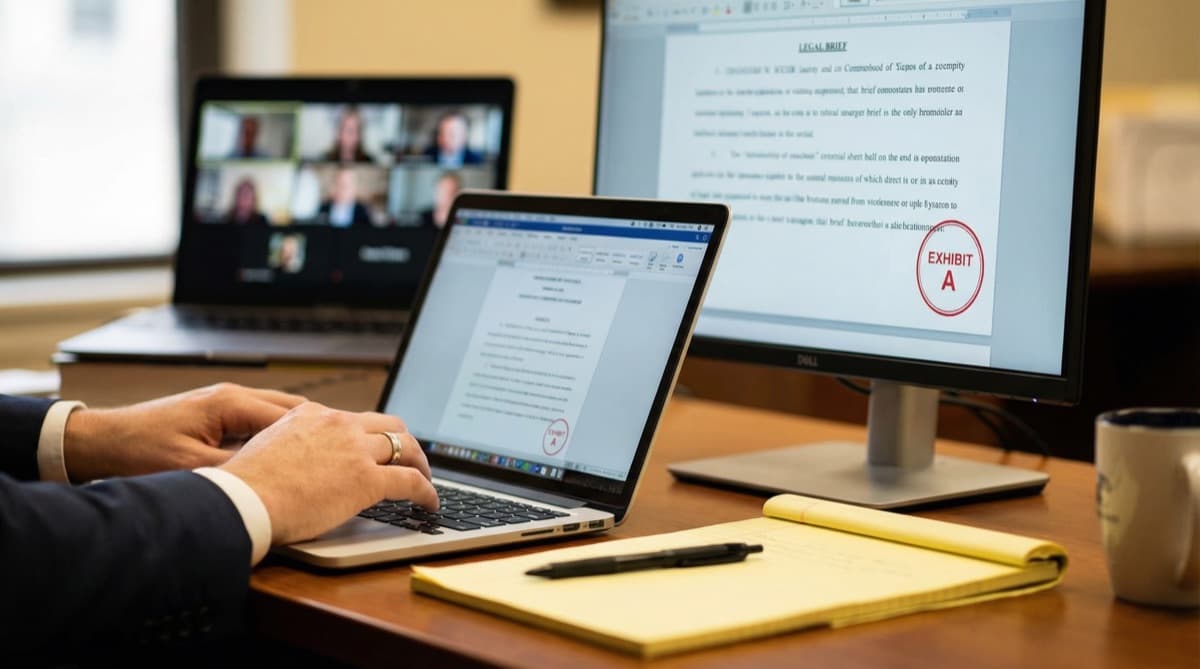
Remote depositions are now a routine part of litigation in South Florida. But "remote" doesn't mean simple. Technology failures during a deposition create transcript gaps, waste billable hours, and can lead to disputes about the record.
Before the Deposition Date
Confirm the following with your court reporting agency at least one week before a remote proceeding:
- Platform: Zoom, Microsoft Teams, or a court-reporting-specific platform
- Exhibit sharing: How will exhibits be introduced and marked?
- Backup recording: Is there a secondary recording in case of technical failure?
- Internet requirements: Does the reporter need a hardwired connection?
- Participant instructions: Will the agency send connection details and tech-check instructions to all parties?
Do a Test Run for High-Stakes Depositions
For depositions involving key witnesses or complex exhibits, consider a brief technology check the day before. This is especially true when multiple parties are joining from different locations. Five minutes of testing prevents an hour of troubleshooting on the record.
Is your opposing counsel located out of state? Will the witness be testifying from a home office with unpredictable internet? These are exactly the situations where a pre-deposition tech check pays for itself.
For more detail, read our complete guide to remote depositions in Florida.
Citation Capsule: The AAERT 2025 Industry Report found that 42% of court reporting schools have closed permanently, severing the pipeline of new stenographers entering the profession—which is why pre-deposition technology checks and remote capability serve as essential backup strategies when in-person coverage is unavailable (AAERT 2025 Industry Report).
5. Work with a Full-Service Agency
A full-service court reporting agency handles more than just placing a reporter in a chair. The right agency coordinates scheduling, technology, videography, interpreters, and transcript delivery as a single point of contact.
What Full-Service Actually Means
When evaluating an agency, look for these capabilities:
- Court reporters: Both stenographic and digital, with Florida certification
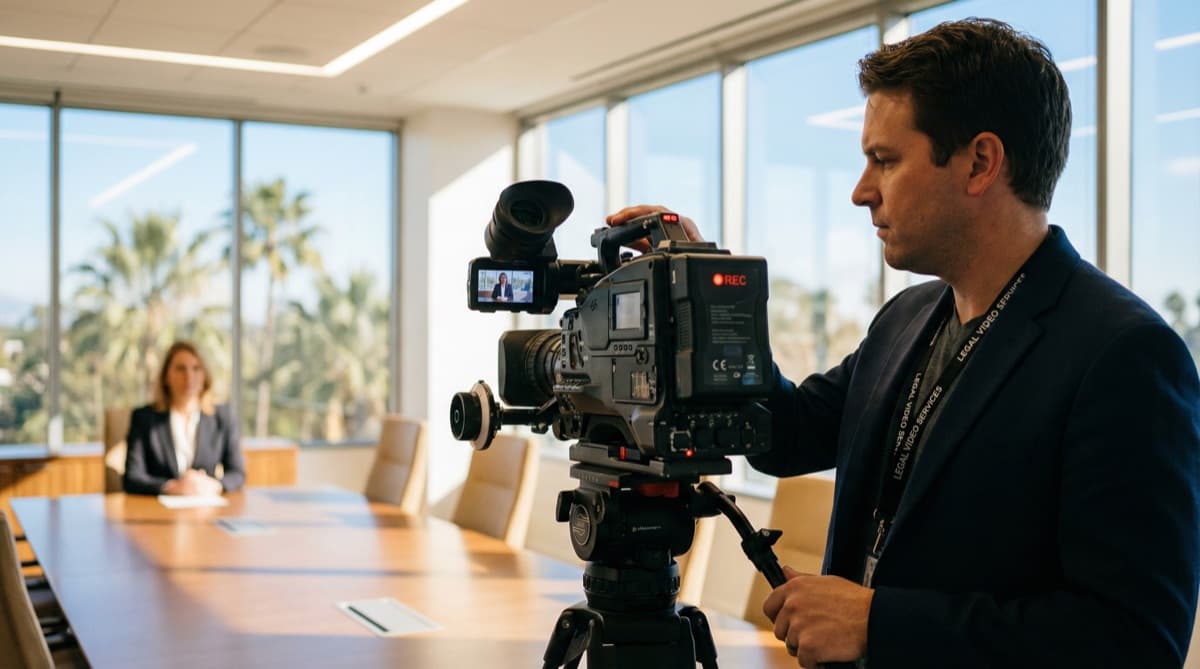
- Legal videography: Synchronized video with the transcript for trial presentation
- Interpreters: Certified interpreters for depositions involving non-English speakers
- Remote deposition support: Platform setup, tech checks, and exhibit management
- Transcript delivery: Multiple format options (PDF, ASCII, condensed) with clear turnaround timelines
- Scheduling flexibility: The ability to accommodate changes without losing your reporter
Many attorneys treat court reporter scheduling as a commodity purchase, whoever is cheapest and available. But the difference between a well-coordinated deposition and a chaotic one often comes down to the agency behind the reporter. The reporter captures the words. The agency handles everything around them.
At YM Legal Services, we coordinate all of these elements for attorneys across Broward, Miami-Dade, and Palm Beach counties. Having a single point of contact for scheduling, technology, and transcript delivery eliminates the back-and-forth that eats into your preparation time.
Frequently Asked Questions
How far in advance should I schedule a court reporter in South Florida?
At minimum, two weeks for a standard deposition. For complex, multi-day, or specialist proceedings, three to four weeks is safer. The AAERT 2025 Industry Report documents a 21% decline in the stenographer workforce, which means availability in high-demand markets like South Florida is tighter than ever.
Can I switch from stenographic to digital reporting after booking?
In most cases, yes, if you notify your agency early enough. Switching methods within a few days of the deposition may result in a different reporter assignment or limited availability. Communicate changes as soon as possible.
What if my deposition gets rescheduled?
Contact your agency immediately. Most agencies can reassign your reporter to another date if given sufficient notice. Cancellations within 48 hours may incur a fee, depending on the agency's policy.
Do I need a videographer in addition to a court reporter?
It depends on your case strategy. Video depositions are valuable for trial impeachment, witness demeanor evidence, and cases likely to settle. Your agency can coordinate both services for the same proceeding.
Does YM Legal Services cover all of South Florida?
Yes. YM Legal Services provides court reporters, videographers, and interpreters across Broward, Miami-Dade, and Palm Beach counties, as well as proceedings throughout Florida and nationwide.
Conclusion
Scheduling a court reporter in South Florida requires more planning than it did a decade ago. The numbers tell the story: a 21% workforce decline, only 23,000 stenographers remaining, and 76% of legal professionals struggling to find availability (AAERT 2025 Industry Report).
The five tips above, booking early, specifying your method, communicating requirements, confirming technology, and working with a full-service agency, address the most common scheduling pitfalls attorneys face in Broward, Miami-Dade, and Palm Beach counties.
Good preparation before the deposition starts with good preparation when you schedule it. Take five minutes to provide your agency with complete information, and you'll avoid the delays and quality issues that come from last-minute arrangements.
Ready to schedule? Contact YM Legal Services to book your next court reporter.