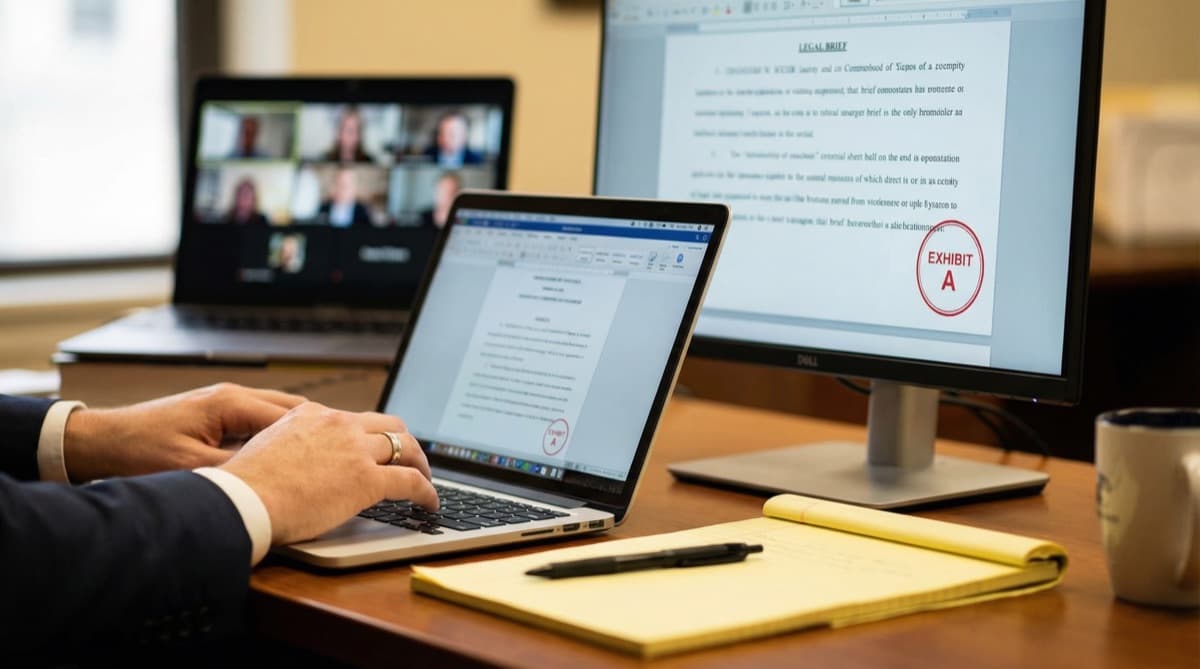
Florida Rule 1.310: Audiovisual Depositions Guide
If you litigate civil cases in Florida, you are undoubtedly familiar with Rule 1.310. It’s the foundational text for oral examinations. But the way attorneys actually use Rule 1.310—specifically concerning audiovisual depositions—has shifted dramatically over the past few years, and many firms are
Yasmin Morshedian
Founder & CEO, YM Legal Services
If you litigate civil cases in Florida, you are undoubtedly familiar with Rule 1.310. It's the foundational text for oral examinations. But the way attorneys actually use Rule 1.310—specifically concerning audiovisual depositions—has shifted dramatically over the past few years, and many firms are still operating on outdated assumptions.
Key Takeaways
- Rule 1.310(b)(4) permits audiovisual deposition recording without a court order or opposing counsel consent, provided the deposition notice states recording will be by audiovisual means.
- A legal videographer—not a Zoom screen recording—is required for court-admissible audiovisual records that meet authentication and admissibility standards.
- Rule 1.310(b)(4)(D) requires the audiovisual recording to be accompanied by a stenographic or digital transcript unless the parties stipulate otherwise.
- Synchronized transcripts that link video timestamps to the certified text are the standard for trial preparation and impeachment.
Before I launched YM Legal Services, I spent years working as a paralegal managing complex discovery schedules. One of the most frequent sources of friction between opposing counsel was the notice and execution of video depositions. The rules were clear, but the practical application was often a mess of technical failures, disputed stipulations, and last-minute scrambles for a videographer.
Today, in 2025, the landscape of audiovisual depositions in Florida is defined by a crucial distinction: the difference between a standard Zoom recording and a court-admissible legal videography record.
Here is what you need to know about navigating Rule 1.310 for audiovisual depositions, and why simply hitting "Record" on a video conference platform is a massive strategic error.
Notice Requirements Under Rule 1.310(b)(4)
The most important aspect of Rule 1.310(b)(4) is that it explicitly permits the recording of a deposition by audiovisual means without the need for a prior court order or the consent of opposing counsel. You have the right to capture the witness on video. However, the rule mandates that the notice of deposition must clearly state that the deposition will be recorded by audiovisual means. If you fail to include this in the notice, opposing counsel can rightfully object to the cameras rolling.
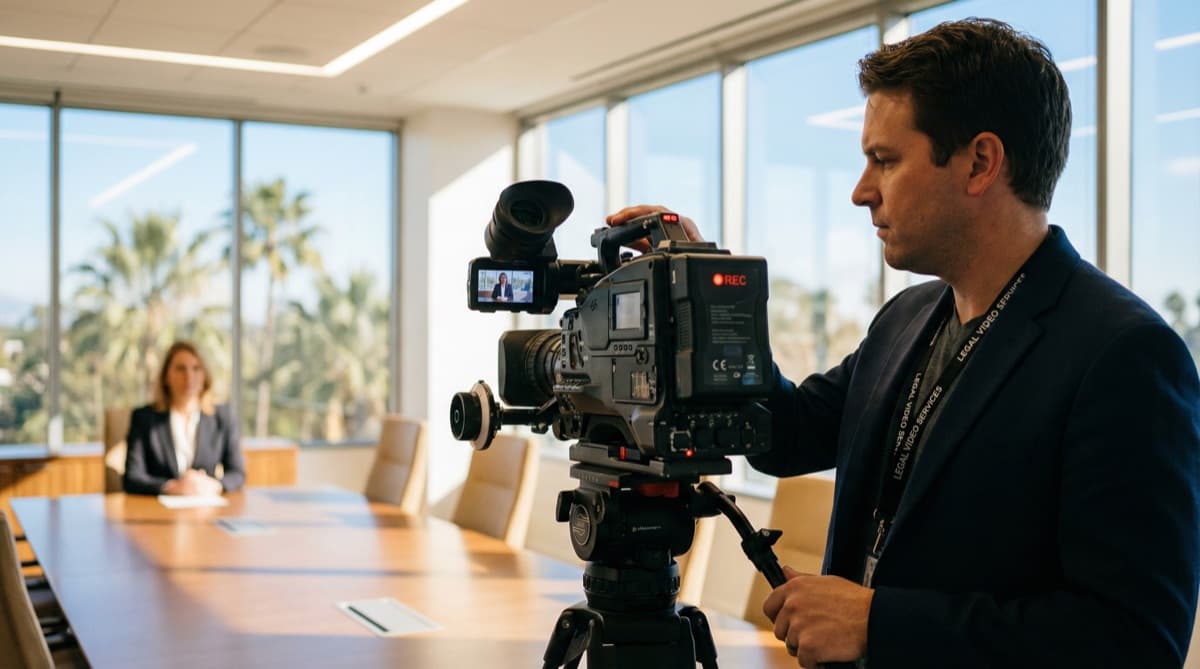
But the rule doesn't stop at notice. It dictates how the recording must be conducted. Rule 1.310(b)(4)(B) requires that the audiovisual recording be made by a person authorized to administer oaths in Florida, or under their direct supervision. This is where the "Zoom recording" strategy falls apart. A legal videographer is an independent, neutral third party whose sole responsibility is to capture an unedited, objective visual record. They are trained to manage lighting, audio levels, and camera angles to ensure the witness is depicted accurately and without prejudice.
When an attorney simply records a Zoom session, they are creating a host of potential admissibility issues. Who controls the recording? Who ensures the audio isn't manipulated? Who verifies that the witness wasn't reading from off-screen notes? A standard video conference recording lacks the foundational authentication required for a trial exhibit.
Citation Capsule: The American College of Trial Lawyers' Guidelines on Conducting Remote Video Depositions recommend dedicated, professionally operated recording equipment rather than platform-native recording features—reinforcing why a legal videographer is essential for any audiovisual record intended for trial use (American College of Trial Lawyers — Guidelines on Conducting Remote Video Depositions).
Professional Legal Videography vs. Zoom Recording
At YM Legal Services, we provide certified legal videographers who operate strictly within the parameters of Rule 1.310. Our videographers, working alongside our Lead Court Reporter, Alexa Perez, utilize broadcast-quality cameras and multi-channel audio systems. They capture a pristine picture-in-picture record, ensuring that both the witness and any shared exhibits are clearly visible.
The Transcript Requirement and Synchronized Records
Furthermore, Rule 1.310(b)(4)(D) states that unless the parties stipulate otherwise, the audiovisual recording must be accompanied by a stenographic or digital transcript. The video does not replace the written record; it supplements it. This is a critical point. The transcript remains the official record of the proceeding, while the video provides the essential context: the witness's demeanor, the length of pauses before answering, the non-verbal cues that a transcript simply cannot convey.
This is why we strongly advocate for synchronized transcripts. When our videographers capture a deposition, our production team, led by Jay Jayson, syncs the final certified transcript directly to the video file. This allows attorneys to search the text and instantly jump to the corresponding moment in the video. It's an invaluable tool for trial preparation and impeachment.
Citation Capsule: Rule 1.310(b)(4)(B) of the Florida Rules of Civil Procedure explicitly requires that audiovisual depositions be recorded by a person authorized to administer oaths or under their direct supervision—a requirement that eliminates generic screen recordings as a viable format for court-admissible video records (Florida Rule of Civil Procedure 1.310 — Depositions Upon Oral Examination).
The strategic advantage of an audiovisual deposition is immense, particularly in high-stakes commercial litigation or personal injury cases where the witness's credibility is paramount. But that advantage is only realized if the recording is unassailable.
For more on how remote proceedings fit within this framework, read our guide on remote depositions in Florida and the proposed camera-on amendment that may soon require all participants to keep video active. For settlement videography that complements deposition video, see our article on settlement documentaries in Florida personal injury cases.
When you book an audiovisual deposition with YM Legal Services at (954) 334-1092, you aren't just hiring someone with a camera. You are securing a dedicated professional who understands the technical and legal requirements of Florida Rule 1.310, ensuring your video record is ready for the courtroom, not just the conference room. Schedule your deposition.
Frequently Asked Questions
Does Florida allow audiovisual depositions without court approval?
Yes. Florida Rule of Civil Procedure 1.310(b)(4) explicitly permits recording a deposition by audiovisual means without a prior court order or opposing counsel consent. The only requirement is that the notice of deposition must clearly state that the deposition will be recorded by audiovisual means.
What are the notice requirements for video depositions in Florida?
The notice of deposition must state that the deposition will be recorded by audiovisual means. If you fail to include this in the notice, opposing counsel can object to video recording. The notice must also include the standard details: date, time, location, and identity of the witness.
Must a video deposition be accompanied by a written transcript?
Under Rule 1.310(b)(4)(D), the audiovisual recording must be accompanied by a stenographic or digital transcript unless the parties stipulate otherwise. The video supplements but does not replace the written record. The transcript remains the official record, while the video captures demeanor, pauses, and non-verbal cues.
What is the difference between a Zoom recording and a legal videography record?
A legal videographer is an independent, neutral professional who captures a broadcast-quality, authenticated visual record suitable for trial. A standard Zoom recording lacks proper authentication, may have audio or visual quality issues, and creates admissibility concerns regarding who controls the recording and whether the witness was reading from off-screen notes.