
Settlement Documentaries in Florida Personal Injury
If you practice personal injury law in Florida, you know that the vast majority of cases never see the inside of a courtroom. They are resolved in mediation or through intense, pre-trial settlement negotiations.
Yasmin Morshedian
Founder & CEO, YM Legal Services
If you practice personal injury law in Florida, you know that the vast majority of cases never see the inside of a courtroom. According to the Bureau of Justice Statistics, roughly 97% of civil cases filed in state courts are resolved before trial (BJS, 2023). They settle in mediation or through intense, pre-trial negotiations where the quality of your presentation materials can make a six-figure difference.
The goal in these negotiations is not just to present the facts. It is to convey the profound, often devastating human impact of an injury. A stack of medical records and a sterile deposition transcript can only do so much. Insurance adjusters are trained to reduce a human being's suffering to a cold, calculated number.
Key Takeaways
- Day-in-the-life settlement documentaries are among the most powerful tools in Florida personal injury negotiations
- A court-admissible documentary must be objective and factual, not staged or directed, under Florida Statute 90.403
- Synchronized transcript technology overlays certified transcripts onto expert testimony video
- A certified legal videographer trained in evidence rules produces fundamentally different work than a commercial videographer
Explore our full legal videography services, including settlement documentaries, day-in-the-life videos, and synchronized deposition recordings.
What Is a Settlement Documentary and Why Does It Work?
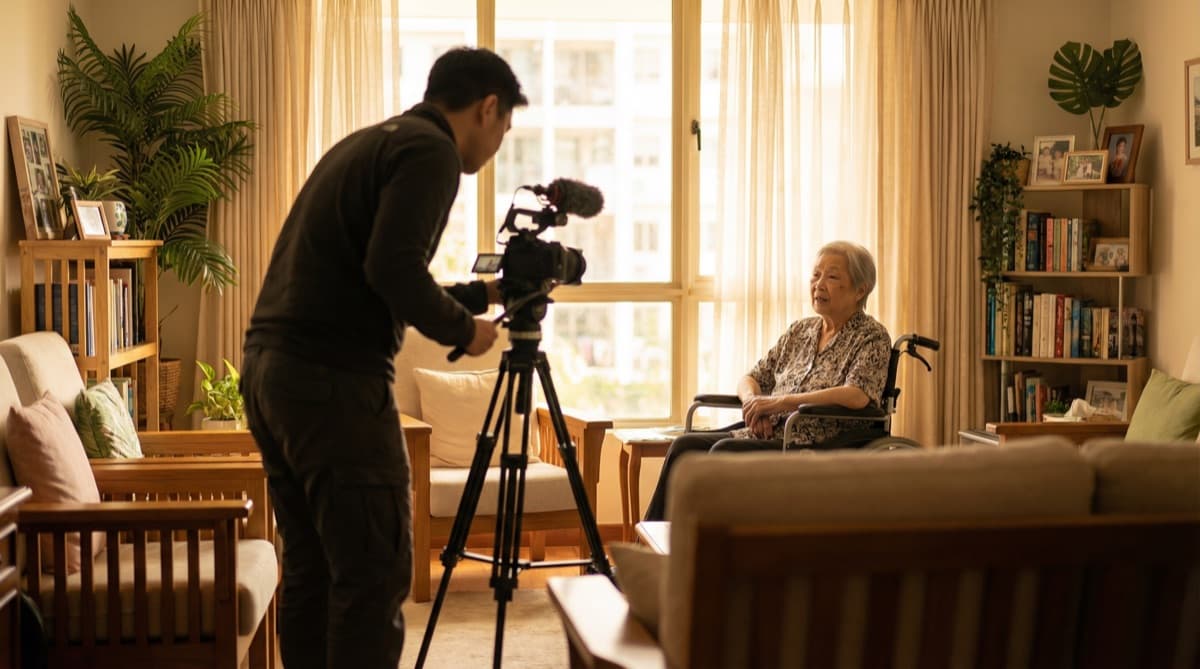
A settlement documentary is a professionally produced video, typically 8 to 15 minutes long, that shows the daily reality of a plaintiff's life after an injury. Trial consultants have found that visual evidence is recalled with approximately 65% greater accuracy than text alone (BJS, 2023). That recall gap explains why these videos shift negotiations so dramatically.
When I was working as a paralegal, I watched these documentaries transform stagnant cases. A claim that an insurance company was valuing at $250,000 suddenly settled for policy limits after the adjuster watched a ten-minute video showing the plaintiff struggling to perform basic daily tasks. The written medical records described "limited mobility." The video showed a father who could not pick up his child.
The difference between reading about someone's injury and watching them live with it is not incremental. It is transformational. I have seen mediators pause the video and ask for a recess because the room needed a moment. That is the kind of impact paper cannot deliver.
The Psychology Behind Visual Evidence
Insurance adjusters and defense attorneys review hundreds of claims files. They become desensitized to medical terminology and billing codes. A settlement documentary breaks through that numbness by reintroducing the human element.
The video does not argue. It does not editorialize. It simply shows a person's reality. And that objectivity is precisely what makes it so persuasive. When a claims adjuster watches a plaintiff take twelve minutes to get out of bed, no written narrative can compete with what their own eyes are telling them.
Citation Capsule: The Bureau of Justice Statistics' Civil Justice Survey confirms that roughly 97% of civil cases filed in state courts resolve before trial—making the quality of pre-trial settlement materials, including day-in-the-life documentaries, a direct determinant of case value in the vast majority of personal injury matters (Bureau of Justice Statistics — Civil Justice Survey of State Courts).
How Do You Keep a Settlement Documentary Admissible in Florida?
Under Florida Statute 90.403, otherwise relevant evidence can be excluded if its probative value is substantially outweighed by the danger of unfair prejudice (Florida Legislature). This is the primary weapon opposing counsel uses to challenge settlement documentaries. If the video looks staged, dramatic, or manipulative, it gets excluded.
This is exactly why you cannot hire a wedding videographer or a commercial production company. They are trained to make things look beautiful and dramatic. A legal videographer is trained to make things look accurate and unassailable.
What Makes a Documentary "Objective" Under the Rules
The videographer must act as a neutral observer, not a director. There should be no staged scenes, no multiple takes, and no instructions to the plaintiff about what to do or how to react. The camera documents what happens naturally throughout the day.
Lighting should be natural and unmanipulated. Music should be absent or minimal and non-emotional. Narration, if any, should be factual and limited to providing context, such as timestamps or medical background. The moment a documentary starts to feel like a movie trailer, it becomes vulnerable to a motion to exclude.
Here is something many attorneys overlook: the metadata on the video file itself can become evidence. If opposing counsel subpoenas the raw footage and discovers multiple takes of the same scene, or footage shot on different days edited together to appear as a single day, the entire documentary's credibility collapses. Professional legal videographers shoot and log footage specifically to withstand this kind of scrutiny.
The Ethical Line Between Persuasion and Manipulation
There is an important distinction that every personal injury attorney needs to understand. A settlement documentary should be persuasive because the truth is persuasive, not because a videographer made it look worse than it is. If the plaintiff has good days and bad days, shooting only on the worst day and presenting it as typical is ethically problematic and practically dangerous.
Good defense attorneys will depose the plaintiff about the filming day. They will ask if it was a typical day. If the plaintiff admits the videographer asked them to schedule the shoot on a day when they were feeling particularly bad, the documentary backfires.
Our court reporting services coordinate directly with our videography team for a unified, court-admissible production.
Citation Capsule: Florida Statute § 90.403 permits exclusion of otherwise relevant evidence when its probative value is substantially outweighed by the danger of unfair prejudice—the precise standard that requires settlement documentaries to be objective, unmanipulated records rather than cinematic productions (Florida Evidence Code § 90.403).
How Does Synchronized Transcript Technology Enhance the Documentary?
This is where the technical capabilities of your court reporting agency directly impact the quality of your settlement package. Synchronized transcript technology links the certified deposition transcript to the corresponding video recording, frame by frame. The result is a presentation where the viewer reads the expert's exact words while simultaneously watching them say it.
The impact of this approach during mediation is significant. It forces opposing counsel to confront the exact presentation that a jury would see if the case goes to trial. It removes the abstraction of the written word and replaces it with undeniable visual evidence.
Building the Synchronized Presentation
When our videographers capture an expert deposition, our production team syncs the certified transcript to the video file. The process involves timestamping each line of the transcript to the corresponding moment in the video. When building the final settlement documentary, key expert testimony segments can be pulled and embedded with the synchronized text scrolling across the screen.
For example, instead of handing the insurance adjuster a transcript page where the orthopedic surgeon says, "This injury is permanent and will require lifetime management," you show them the surgeon saying those exact words, with the official transcript text running underneath. The adjuster can see the doctor's face, hear the conviction in their voice, and read the certified words simultaneously.
When to Use Synchronized Clips vs. Standalone Documentary Footage
Not every case needs the full synchronized treatment. For straightforward soft-tissue cases, a clean day-in-the-life video may be sufficient. But for high-value cases involving catastrophic injury, medical malpractice, or complex causation, synchronized expert testimony clips are worth the investment.
We generally recommend synchronization when you have strong expert testimony that you want the mediator and opposing counsel to experience rather than just read. The question is always: will a jury see this testimony? If yes, showing opposing counsel exactly what that jury experience will look like is your strongest negotiating tool.
For an alternative approach to extracting key testimony from lengthy depositions, see our guide to AI deposition summaries.
What Is the Difference Between a Legal Videographer and a Commercial Videographer?
This is not a branding distinction. It is a functional one. A legal videographer understands the rules of evidence, chain of custody requirements, and the specific technical standards that Florida courts demand. A commercial videographer understands lighting, composition, and storytelling. Those are different skill sets, and they produce fundamentally different work products.
According to Florida Statute 90.401, relevant evidence is evidence tending to prove or disprove a material fact (Florida Legislature). A legal videographer captures evidence. A commercial videographer creates content. When your footage is subject to admissibility challenges, that distinction matters enormously.
Equipment and Technical Standards
A legal videographer uses broadcast-quality equipment calibrated for accuracy, not aesthetics. The camera settings prioritize faithful color reproduction over cinematic look. Audio is captured with professional-grade microphones that produce clear, intelligible recordings, because the audio is part of the evidentiary record.
File management follows strict protocols. Every piece of raw footage is preserved in its original format with full metadata. Edited versions are created as separate files, never overwriting the originals. The chain of custody for digital files is documented from the moment the camera starts recording until the final product is delivered.
Why Your Court Reporting Agency Should Provide Videography
Having your court reporter and legal videographer come from the same agency creates efficiencies that matter. The reporter and videographer coordinate on exhibit timing, transcript synchronization, and technical setup. There is a single point of contact for scheduling, a unified quality standard, and no finger-pointing when issues arise.
In our experience producing settlement documentaries across Miami, Fort Lauderdale, and West Palm Beach, cases that include synchronized video presentations settle at mediation at measurably higher rates than those relying solely on paper exhibits and written transcripts.
When expert depositions are conducted via video, our remote deposition services capture broadcast-quality footage ready for documentary integration.
How Should You Plan a Settlement Documentary for Maximum Impact?
The most effective settlement documentaries are planned early in the case, not cobbled together two weeks before mediation. Here is a practical timeline and planning framework.
Start Planning at the Case Assessment Stage
Identify early whether the case has strong visual elements. Catastrophic injury cases are obvious candidates, but even cases involving chronic pain, cognitive impairment, or loss of household services can benefit from day-in-the-life footage. The question is: does the plaintiff's daily reality tell a story that paper cannot?
Coordinate With Your Medical Experts
If you plan to include synchronized deposition clips, schedule the expert depositions with video in mind. Brief the legal videographer on the key testimony you expect. This allows the videographer to optimize camera angles, lighting, and audio for the segments most likely to appear in the final documentary.
Allow Adequate Production Time
Rushing a settlement documentary defeats its purpose. Allow at least three weeks between the final shoot day and the mediation date. Complex productions with multiple synchronized depositions may need four to six weeks. This time is necessary for editing, synchronization, quality review, and attorney approval of the final cut.
For help coordinating reporters and videographers on the same calendar, see our guide to scheduling a court reporter in South Florida.
Producing a high-quality settlement documentary requires a specific blend of technical expertise and legal understanding. It requires an agency that knows the rules of evidence in Florida and possesses the broadcast-quality equipment to produce a professional final product.
When you are preparing for a high-stakes mediation in the 11th, 15th, or 17th Judicial Circuit, don't rely solely on paper. Contact our team at (954) 334-1092 to discuss how a settlement documentary can shift the outcome of your next personal injury case.
Ready to elevate your mediation strategy? Schedule a legal videography consultation with YM Legal Services.
Related Reading: What Is Court Reporting? A Complete Guide | AI Deposition Transcript Summaries: What Florida Attorneys Should Know | The Complete Guide to Remote Depositions in Florida
Frequently Asked Questions
What is a day-in-the-life settlement documentary?
A day-in-the-life documentary is a professionally produced video that captures the daily reality of a plaintiff living with their injury. It is used during mediation or pre-trial settlement negotiations to convey the human impact of an injury in a way that medical records and written transcripts cannot.
Are settlement documentaries admissible in Florida courts?
Yes, provided they meet evidentiary standards under Florida Statute 90.401 and 90.403. The video must be an objective, factual representation of the plaintiff's daily life, not staged, directed, or manipulated. If opposing counsel perceives the documentary as overly prejudicial, they will move to exclude it. A certified legal videographer trained in Florida's rules of evidence is essential.
What is synchronized transcript technology?
Synchronized transcript technology links the certified deposition transcript to the corresponding video recording. When building a settlement documentary, key expert testimony can be presented with the synchronized text scrolling on screen, showing opposing counsel and insurance adjusters the exact presentation a jury would see at trial.
How much does a legal videography production cost?
The cost varies based on the scope. A single day-in-the-life shoot differs from a multi-day production with expert deposition clips. Contact YM Legal Services for a detailed quote based on your specific case requirements and timeline.
How long does it take to produce a settlement documentary?
Turnaround depends on complexity. A straightforward day-in-the-life video with one shooting day and minimal deposition clips can typically be completed in two to three weeks. Multi-day productions with synchronized expert testimony may take four to six weeks. Schedule early to allow adequate production time before your mediation date.