Remote Depositions in Florida: A Guide for Attorneys
Remote depositions have become standard practice in Florida litigation. This guide covers the legal framework, technology requirements, and best practices for conducting remote depositions.

Yasmin Morshedian
Founder & CEO, YM Legal Services
Remote depositions are now a standard part of Florida civil litigation. Over 70% of law firms conduct at least some depositions remotely, according to a Rev Legal Technology Survey (2024).
Yasmin Morshedian founded YM Legal Services in 2018 and has coordinated hundreds of remote depositions across Florida. Her agency provides full-service remote deposition support from nine offices, including platform setup, tech checks, and certified court reporters experienced in virtual proceedings. Florida Rule of Civil Procedure 1.310 permits depositions by remote electronic means, and attorneys across the state rely on this option for efficiency, cost savings, and scheduling flexibility. Whether you're new to remote depositions or looking to refine your process, this guide covers the rules, the technology, and the practical details that matter.
Learn more about our court reporting services and how we support remote proceedings across Florida.
Key Takeaways
- Florida Rule 1.310 allows remote depositions by stipulation or court order, with no separate motion required when parties agree.
- Over 70% of firms now use remote depositions (Rev Legal Technology Survey, 2024).
- A certified court reporter must administer the oath and produce the transcript, whether remote or in-person.
- Reliable internet, proper lighting, and a quiet environment are the biggest factors in deposition quality.
How Do Remote Depositions Work in Florida?
Remote depositions in Florida follow the same basic structure as in-person depositions, with one key difference: participants connect through video conferencing instead of gathering in a single room. Over 70% of law firms conduct some depositions remotely, and 34% expect to increase remote deposition usage in the coming years, according to the Rev Legal Technology Survey (2024). Florida Rule of Civil Procedure 1.310(b)(4) authorizes depositions by remote electronic means when parties stipulate or a court orders it.
The Basic Process
The noticing attorney serves a notice of deposition specifying that it will be conducted by remote electronic means. A certified court reporter joins the video conference, administers the oath, and records the testimony. Exhibits are shared through a secure document platform or screen sharing.
Here's what a typical remote deposition involves:
- Notice of deposition served with "remote electronic means" language
- Video conference link distributed to all parties, the witness, and the court reporter
- Exhibit exchange completed before the deposition, with a secure platform for real-time sharing
- Oath administered by the court reporter via video
- Examination proceeds as it would in person
- Transcript produced by the certified reporter
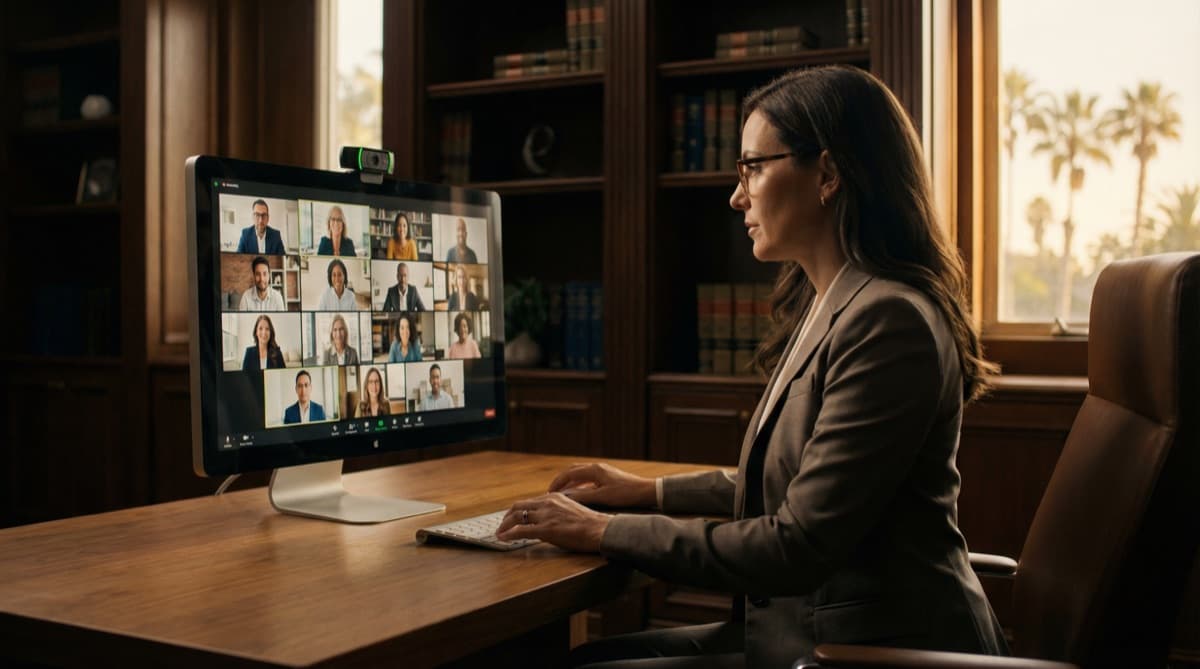
The experience feels similar to an in-person deposition. Attorneys ask questions, opposing counsel makes objections, and the court reporter captures every word. The main adjustment is technical: everyone needs a stable connection, a working camera, and a quiet space.
Ready to schedule a deposition? We handle all the logistics so you can focus on your case.
What Makes It "Remote"?
A deposition qualifies as remote when one or more participants joins by video or telephone rather than being physically present. Some depositions are fully remote, with all parties on video. Others are hybrid, where the witness and examining attorney are in the same room while opposing counsel appears by video.
Legal Framework: Florida Rule 1.310
Florida Rule of Civil Procedure 1.310(b)(4) is the governing authority for remote depositions. The rule states that parties may stipulate to, or the court may order, a deposition to be taken by "telephone or other remote electronic means." No additional motion is required when all parties agree (Florida Rules of Civil Procedure).
Under Florida Rule of Civil Procedure 1.310(b)(4), depositions may be conducted by telephone or other remote electronic means when parties stipulate or when the court issues an order. The deposition is deemed taken at the location where the deponent answers questions, regardless of where other participants are located.
Key Provisions
Stipulation or court order. The simplest path is a stipulation among counsel. If one party objects, the noticing party can file a motion requesting the court permit remote testimony.
Location of the deposition. Under Rule 1.310(b)(4), a remote deposition is considered to take place where the deponent is located. This matters for jurisdictional questions and determining which court reporter can swear in the witness.
Officer requirements. The court reporter or other officer must still administer the oath and certify the transcript. Florida law requires the officer to be in the same jurisdiction as the deponent, or the parties must stipulate otherwise.
In practice, most opposing counsel in Florida agree to remote depositions without objection, especially for out-of-state witnesses and expert depositions where travel costs would be significant.
What About Objections?
Objections work the same way remotely. Counsel states the objection on the record, and the witness answers subject to the objection unless instructed not to answer. The only real difference is that attorneys can't physically hand documents to the witness, so exhibit management requires advance planning.
Citation Capsule: Florida Rule of Civil Procedure 1.310(b)(4) explicitly authorizes depositions by "telephone or other remote electronic means" by stipulation or court order—establishing remote proceedings as a permanent part of Florida discovery, not a pandemic workaround (Florida Rule of Civil Procedure 1.310).
What Are the Technology Requirements for Remote Depositions?
A stable internet connection with at least 10 Mbps upload speed is the single most important technical requirement for remote depositions. The Rev Legal Technology Survey (2024) found that 89% of legal professionals ranked connection reliability as their top concern with remote proceedings.
Hardware
- Computer: A desktop or laptop with a modern processor. Tablets and phones can work in a pinch, but they limit screen sharing and exhibit review.
- Camera: A built-in laptop camera is acceptable. An external HD webcam provides better image quality and more flexible positioning.
- Microphone: An external USB microphone or quality headset reduces background noise. Built-in laptop microphones often pick up keyboard sounds and room echo.
- Lighting: Position a light source in front of you, not behind. A ring light or desk lamp aimed at your face prevents the silhouette effect that makes video testimony hard to read.
Software
Most court reporting firms use Zoom, Microsoft Teams, or proprietary deposition platforms. The platform should support:
- Screen sharing for exhibit review
- Recording for archival purposes
- Breakout rooms for private attorney-client conferences
- Chat functionality for off-the-record communication with your client
At YM Legal Services, we've conducted hundreds of remote depositions and found that Zoom remains the most widely accepted platform among Florida attorneys, followed by dedicated deposition platforms that offer built-in exhibit management.
Internet Requirements
Wired ethernet connections outperform Wi-Fi for depositions. If you must use Wi-Fi, sit close to the router and close unnecessary applications. Here are the recommended minimums:
| Requirement | Minimum | Recommended | |------------|---------|-------------| | Download speed | 5 Mbps | 25+ Mbps | | Upload speed | 5 Mbps | 10+ Mbps | | Latency | Under 150ms | Under 50ms | | Connection type | Wi-Fi | Wired ethernet |
For a complete guide to remote deposition services, visit our service page.
What Are the Best Practices for Remote Depositions?
Preparation is the difference between a smooth remote deposition and a frustrating one. According to the American Bar Association (2024), 62% of attorneys who reported problems with remote depositions cited preventable technical issues as the primary cause.
Before the Deposition
Test everything 24 hours early. Log into the platform, check your camera and microphone, and verify your internet speed. Ask your witness to do the same. Problems discovered the morning of the deposition cost billable time and create a record that looks unprofessional.
Exchange exhibits in advance. Send all planned exhibits to opposing counsel and the court reporter at least 48 hours before the deposition. Use Bates-stamped PDFs with a clear naming convention. This avoids the awkward scramble of emailing documents mid-deposition.
Prepare your witness for the format. Remind them to look at the camera when answering, not the screen. Coach them on the slight audio delay that can cause people to talk over each other. A simple rule: pause for two seconds after each question before answering.
During the Deposition
Mute when not speaking. Background noise from your office, home, or coffee shop is distracting and ends up on the record.
Use the "raise hand" feature or verbal cues for objections. Don't interrupt mid-sentence. State "Objection" clearly, then let the question finish if needed.
Take breaks every 60-90 minutes. Screen fatigue is real. Witnesses lose focus faster on video than in person. Short breaks keep testimony sharp.
But what happens when the technology fails mid-deposition? Have a backup plan. Keep the court reporter's phone number handy, and agree in advance on a protocol for reconnecting if someone drops off. For more on choosing and scheduling the right reporter, see our guide on scheduling a court reporter in South Florida.
After the Deposition
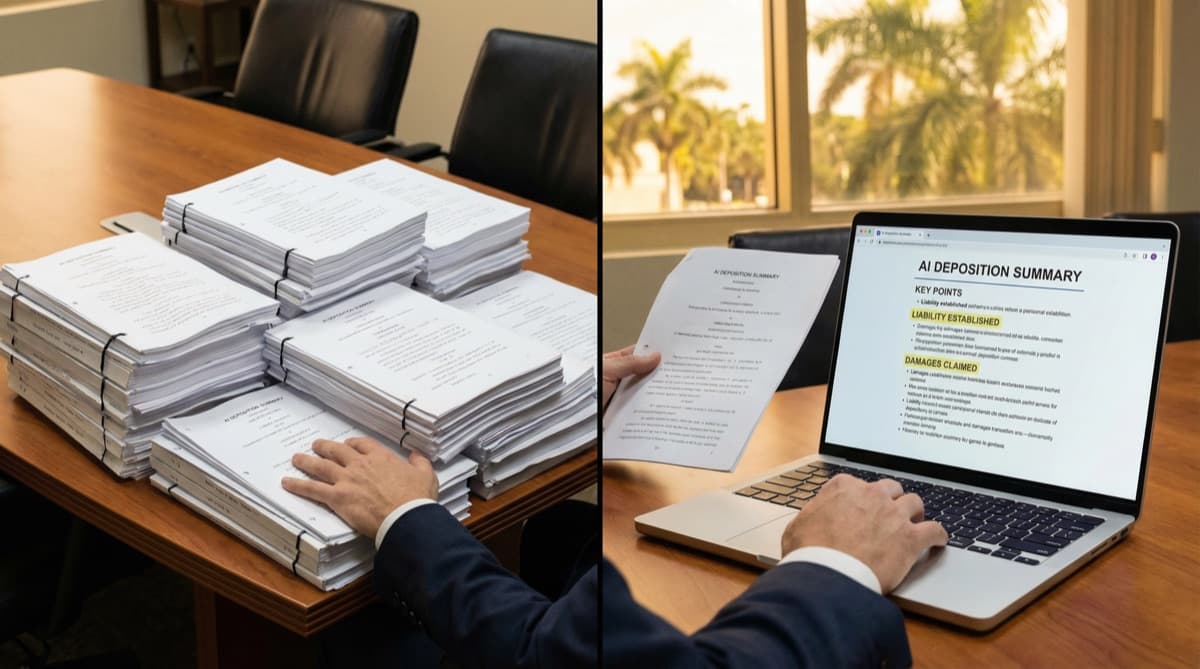
Review the transcript carefully. Audio issues during remote depositions can occasionally cause misheard words. If something looks wrong, flag it during the errata process. Once the transcript is finalized, AI-powered transcript summaries can help you digest the testimony quickly and identify key admissions.
If your remote deposition was video-recorded, our legal videography services include synchronized transcript-video delivery for trial preparation.
When Should You Choose Remote vs. In-Person Depositions?
Remote depositions save an average of $2,400 per proceeding in travel and facility costs, according to data from the National Court Reporters Association (2023). But cost savings alone don't determine the right format. The decision depends on the witness, the case, and the stakes involved.
When Remote Works Best
- Expert witness depositions. Experts are often in different states. Remote depositions eliminate travel costs and scheduling delays.
- Short, focused depositions. A 30-minute deposition of a records custodian doesn't justify a conference room booking and travel.
- Out-of-state witnesses. Florida attorneys deposing witnesses in other jurisdictions save significant time and money with remote proceedings.
- Busy litigation schedules. When you need to depose four witnesses in four different cities within two weeks, remote makes it possible.
When In-Person Works Better
- High-stakes witness examinations. When credibility is the central issue, being in the same room lets you observe body language, eye contact, and subtle reactions that cameras can miss.
- Document-heavy depositions. If you plan to use dozens of exhibits and need the witness to flip between them quickly, physical binders can be more efficient than screen sharing.
- Hostile or evasive witnesses. The formality of an in-person setting can discourage evasive behavior. It's harder to look at your phone or reference notes off-camera when opposing counsel is sitting across the table.
Citation Capsule: The Rev Legal Technology Survey found that 34% of law firms expect to increase remote deposition usage in the coming years, making proficiency with remote proceedings a baseline operational competency for litigation teams, not an optional convenience (Rev Legal Technology Survey).
The hybrid model is gaining traction fast. We've seen an increasing number of Florida attorneys keep the examining attorney and witness in the same room while allowing opposing counsel and the court reporter to attend remotely. This combines the tactical advantages of in-person examination with the convenience of remote participation for other parties.
For help deciding, see our comparison of in-person vs. remote depositions.
Frequently Asked Questions
Can you take a deposition by Zoom in Florida?
Yes. Florida Rule of Civil Procedure 1.310(b)(4) permits depositions by "remote electronic means," which includes Zoom and similar platforms. Parties can stipulate to the format, or the court can order it. Over 70% of law firms now use video platforms for at least some depositions (Rev Legal Technology Survey, 2024). A certified court reporter must still administer the oath and produce the official transcript.
Does the court reporter need to be in the same room as the witness?
Not necessarily. Florida law generally requires the court reporter to be in the same jurisdiction as the deponent for oath administration purposes. However, parties can stipulate to allow the reporter to appear remotely as well. Many court reporting firms now offer fully remote reporters who are licensed in the deponent's jurisdiction.
Are remote deposition transcripts admissible in court?
Yes. A remote deposition transcript carries the same weight as an in-person transcript, provided the deposition was conducted in compliance with Florida Rule 1.310. The court reporter certifies the transcript regardless of how the testimony was taken. There is no separate admissibility standard for remote depositions.
How much do remote depositions cost compared to in-person?
Remote depositions typically cost less because they eliminate conference room fees, travel expenses, and parking. The National Court Reporters Association reports average savings of $2,400 per proceeding (NCRA, 2023). Court reporting fees, transcript costs, and videographer charges remain similar. The savings come primarily from logistics, not from the reporting itself. See our court reporter cost guide for detailed Florida pricing.
Conclusion
Remote depositions have earned their place in Florida litigation. The rules support them, the technology is reliable, and the cost savings are real. For most cases, a remote deposition delivers the same quality testimony as an in-person proceeding, with far less logistical friction.
The key is preparation. Test your technology, exchange exhibits early, and coach your witness on the format. Choose in-person when the stakes demand it, and use remote when efficiency matters most.
If you're scheduling a remote deposition in Florida, YM Legal Services provides certified court reporters experienced in remote proceedings across all major video platforms. Contact us or schedule online to set up your next deposition.
Related Reading
- What Is Court Reporting? A Complete Guide -- understand the reporting methods available for your remote deposition
- 5 Tips for Scheduling a Court Reporter in South Florida -- how to secure the right reporter, including for remote proceedings
- How AI Is Transforming Deposition Transcript Summaries -- what to do with the transcript after the deposition ends