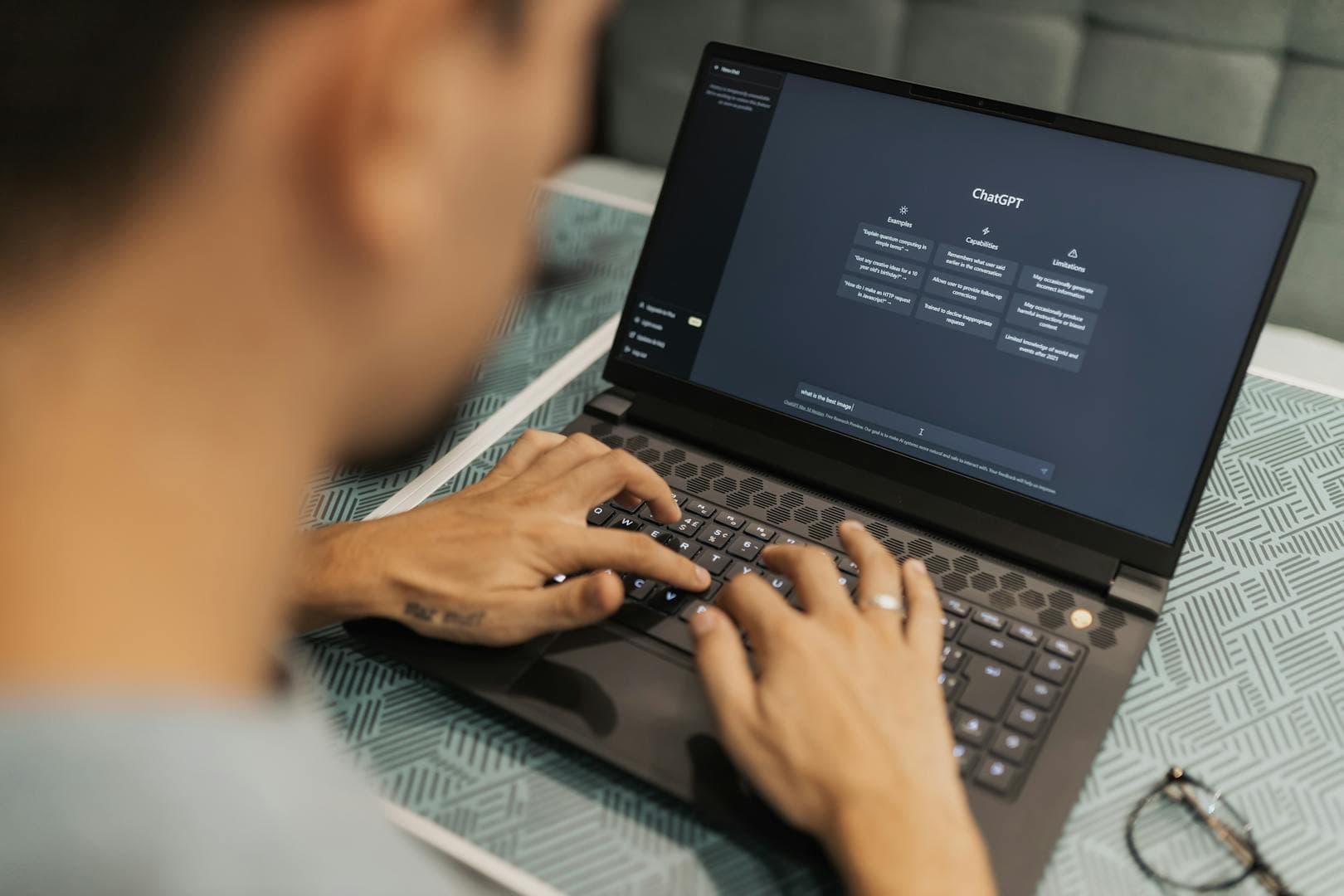
AI Deposition Summaries: Accuracy Without Hallucinations
If you’ve spent any time litigating complex commercial or personal injury cases in Florida, you know the dread of receiving a 300-page deposition transcript three days before a major hearing. The raw data is there, but extracting the narrative, the admissions, and the contradictions requires hours o
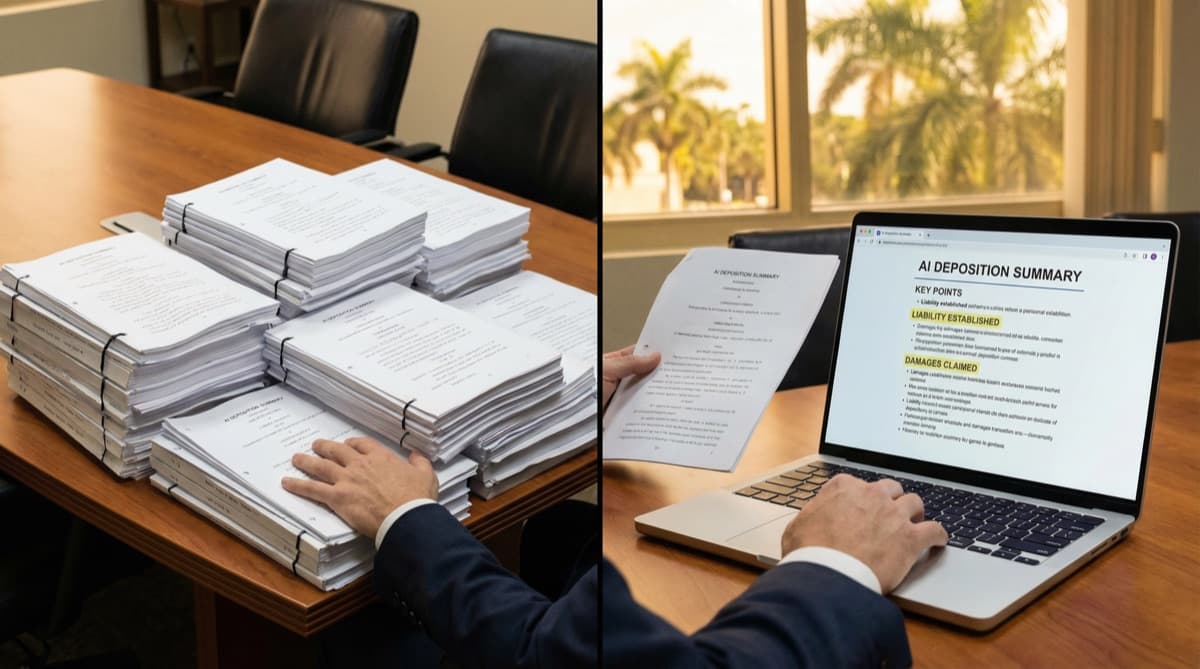
Yasmin Morshedian
Founder & CEO, YM Legal Services
If you've spent any time litigating complex commercial or personal injury cases in Florida, you know the dread of receiving a 300-page deposition transcript three days before a major hearing. The raw data is there, but extracting the narrative, the admissions, and the contradictions requires hours of grueling, expensive associate time.
Key Takeaways
- Consumer-grade AI tools like ChatGPT are a malpractice risk for deposition summaries—they hallucinate facts and misattribute quotes.
- Enterprise-grade, constrained LLMs tuned for legal extraction eliminate creative synthesis and stick to verbatim text.
- The "human-in-the-loop" verification layer—line-by-line audit against the certified transcript—is what achieves 100% accuracy.
- Florida Bar Advisory Opinion 24-1 requires lawyers to understand and supervise any AI tools used in legal practice, and client data must never be exposed to public training datasets.
For years, the promise of Artificial Intelligence in the legal field was just that—a promise. We heard about algorithms that could instantly digest mountains of testimony and spit out perfect, actionable insights. But the reality, until very recently, was a minefield of "hallucinations"—AI confidently inventing facts, misattributing quotes, or completely missing the nuanced context of a cross-examination.
When I founded YM Legal Services, I was incredibly skeptical of integrating AI into our transcript production workflow. My background as a paralegal taught me that in litigation, "almost right" is entirely wrong. A blown page-line citation or a hallucinated admission in a summary isn't just an inconvenience; it’s a strategic disaster that can destroy credibility with the court.
However, the technology has crossed a critical threshold. When deployed correctly—and that is a massive caveat—AI deposition summaries are no longer a novelty; they are a competitive necessity.
Here is how YM Legal Services utilizes AI to deliver 100% accurate, court-ready deposition summaries, and why simply uploading a transcript to ChatGPT is a dangerous malpractice risk.
Why Consumer AI Tools Fail for Legal Work
The core issue with consumer-grade AI models is their architecture. They are designed to be conversational and creative, which means they are inherently prone to filling in the blanks when they encounter ambiguous testimony. If a witness gives a meandering, contradictory answer regarding a timeline, a basic AI model might attempt to synthesize a coherent narrative that never actually occurred on the record.
Our approach at YM Legal Services is fundamentally different. We do not use consumer-facing AI. We utilize enterprise-grade, highly constrained Large Language Models (LLMs) that are specifically tuned for legal extraction, not creative writing.
When we process a certified transcript, our AI engine is instructed to perform a highly structured analysis. It identifies key admissions, chronologies, and contradictions, but it is strictly prohibited from synthesizing information outside the verbatim text.
Citation Capsule: Stanford's Human-Centered AI Institute found that leading AI legal research tools hallucinate in at least one out of every six queries—a rate that would be catastrophic in deposition summary work where a single fabricated admission can derail a case strategy (Stanford HAI — Hallucination-Free? Assessing the Reliability of Leading AI Legal Research Tools).
The Human-in-the-Loop Verification Process
But the technology is only the first step. The true differentiator—and the only way to achieve 100% accuracy—is the "human-in-the-loop" verification process.
This is where our Production Specialist, Jay Jayson, and our team of experienced legal professionals take over. Every single AI-generated summary is subjected to a rigorous, line-by-line audit against the certified transcript. We verify every single page and line citation. We ensure that the context of an admission hasn't been skewed by the algorithm. If the AI flags a potential contradiction, a human expert reviews the surrounding testimony to confirm its validity.
We do not deliver a summary to a client until it has passed this human verification layer. The AI does the heavy lifting of initial extraction, reducing a 10-hour task to a matter of minutes, but the human expert ensures the output is strategically sound and factually unassailable.
Data Security and Florida Bar Compliance
Furthermore, we address the critical issue of data security. As mandated by the Florida Bar's ethical guidelines regarding client confidentiality, you cannot expose sensitive deposition testimony to public AI training datasets. YM Legal Services operates within a SOC 2 compliant, encrypted cloud infrastructure. We enforce a strict "zero data retention" policy with our AI providers. Your transcripts are processed in an isolated environment and are never used to train external models. Once the summary is generated and verified, the data is purged from the AI processing layer.
Citation Capsule: ABA Formal Opinion 512 establishes that attorneys have an affirmative duty to understand the limitations of any generative AI tool they use, to supervise its output, and to take personal responsibility for the accuracy of AI-assisted work product submitted to courts or shared with clients (ABA Formal Opinion 512 — Generative Artificial Intelligence Tools).
The result is a highly structured, hyper-linked document that allows an attorney to instantly navigate from a summarized point directly to the exact moment in the certified transcript. It transforms a static 300-page document into a dynamic, searchable database of admissions and key testimony.
In Florida litigation, efficiency is a massive advantage. But efficiency without accuracy is a liability. By combining enterprise-grade AI extraction with rigorous human verification, YM Legal Services delivers court-ready deposition summaries—without the hallucinations.
Ready to see AI-powered summaries in action? Schedule a demo with YM Legal Services or call (954) 334-1092.
Related Reading: AI Mandates in the 11th and 17th Circuits | AI Transcript Summaries Service
Frequently Asked Questions
Are AI deposition summaries admissible in Florida courts?
AI-generated summaries are work product tools used to assist attorneys in preparation—they are not filed as evidence. The underlying certified transcript remains the official record. Florida Bar Advisory Opinion 24-1 permits AI use provided the attorney understands, supervises, and takes responsibility for the output.
What is a "hallucination" in the context of AI deposition summaries?
A hallucination occurs when an AI model confidently generates information that does not exist in the source transcript—inventing quotes, misattributing testimony, or fabricating page-line citations. Consumer-grade AI tools are particularly prone to this because they are designed for creative, conversational responses rather than strict extraction.
How does YM Legal Services prevent AI hallucinations in summaries?
We use enterprise-grade, constrained LLMs that are prohibited from synthesizing information outside the verbatim transcript text. Every AI-generated summary then passes through a human-in-the-loop verification process where experienced legal professionals audit each citation line-by-line against the certified transcript.
Is it safe to upload deposition transcripts to AI tools?
Uploading to consumer tools like ChatGPT exposes sensitive testimony to public training datasets, violating Florida Bar confidentiality requirements. YM Legal Services operates within SOC 2 compliant, encrypted infrastructure with a strict zero data retention policy—your transcripts are never used to train external models.