Florida's Proposed Camera-On Deposition Amendment
The convenience of the remote deposition is undeniable. What started as a pandemic necessity in 2020 has permanently rewired how discovery is conducted in Florida. But convenience often comes at the cost of control, and the courts are starting to push back against the vulnerabilities inherent in a Z
Yasmin Morshedian
Founder & CEO, YM Legal Services
The convenience of the remote deposition is undeniable. What started as a pandemic necessity in 2020 has permanently rewired how discovery is conducted in Florida. According to the American Bar Association, over 70% of attorneys reported conducting at least some depositions remotely by 2023. But convenience often comes at the cost of control, and the courts are starting to push back against the vulnerabilities inherent in a Zoom room.
For background on the current rules, see our complete guide to remote depositions in Florida.
Key Takeaways
- The Florida Supreme Court's Civil Procedure Rules Committee is advancing a strict "camera-on" mandate for all participants in remote depositions.
- The amendment directly targets remote witness coaching, including off-screen texts, second monitors, and non-verbal cues from out-of-frame counsel.
- Court reporters will bear increased technical responsibility, monitoring the video grid and noting any camera failures on the record.
- If counsel and witness are co-located, Florida Rule 1.310 best practices require two separate video feeds from different devices.
If you are defending or taking remote depositions in Florida right now, you need to be paying very close attention to the Civil Procedure Rules Committee and their proposed amendments to the remote deposition rules.
Specifically, there is a movement gaining serious traction at the Florida Supreme Court level to mandate a strict "camera-on" requirement for all participants in a remote deposition.
This isn't just about courtroom etiquette. It is a direct, targeted response to a growing problem that every litigator whispers about but rarely addresses on the record: remote witness coaching.
Why Is Florida Pushing a Camera-On Mandate for Remote Depositions?
A 2024 survey by the Federal Judicial Center found that 43% of federal judges expressed concern about witness coaching during remote proceedings (FJC, 2024). Florida's Civil Procedure Rules Committee is responding to the same anxiety at the state level. The proposed amendment would require every participant to remain visible on camera for the entire proceeding.
When I talk to managing partners across South Florida, the anxiety is palpable. You have a key witness on the screen. Their attorney is sitting just out of frame, or worse, in another location entirely. The witness pauses before answering a crucial question regarding a timeline.
Is that a natural pause for recollection, or are they reading a text message on a second monitor? Are they receiving non-verbal cues from someone sitting just outside the camera's field of view?
The proposed "camera-on" amendment aims to eliminate this ambiguity. The logic is simple: if you are participating in the proceeding, you must be visible on the record.
Citation Capsule: The Florida Supreme Court's Civil Procedure Rules Committee is advancing a camera-on mandate requiring all remote deposition participants to remain visible, directly targeting the 43% judicial concern rate about witness coaching in remote proceedings identified by the Federal Judicial Center in 2024.
What Counts as "Witness Coaching" in a Remote Setting?
In a traditional conference room, everyone is visible. There's no hiding. Remote depositions introduced a new category of risk. Here's what the amendment targets:
- Second-monitor prompts. A witness reads notes, case summaries, or real-time text messages on a screen the camera doesn't capture.
- Off-camera counsel signals. An attorney sits just outside the webcam frame, using hand gestures or facial expressions to guide the witness.
- Chat-based coaching. Participants use text messaging apps, email, or platform chat features during testimony.
- Virtual background concealment. Blurred or virtual backgrounds hide other people in the room, notes on the wall, or documents on the desk.
In my years coordinating depositions, I've seen attorneys discover mid-proceeding that a witness had a second monitor open. It derails the entire process and creates grounds for sanctions motions that eat up weeks of litigation time.
How Will the Camera-On Rule Change Court Reporter Responsibilities?
Under the proposed mandate, the court reporter's role expands significantly. The NCRA has noted that remote proceedings already require reporters to manage technology far beyond traditional stenographic duties. The camera-on rule amplifies this by adding visual monitoring to an already demanding task.
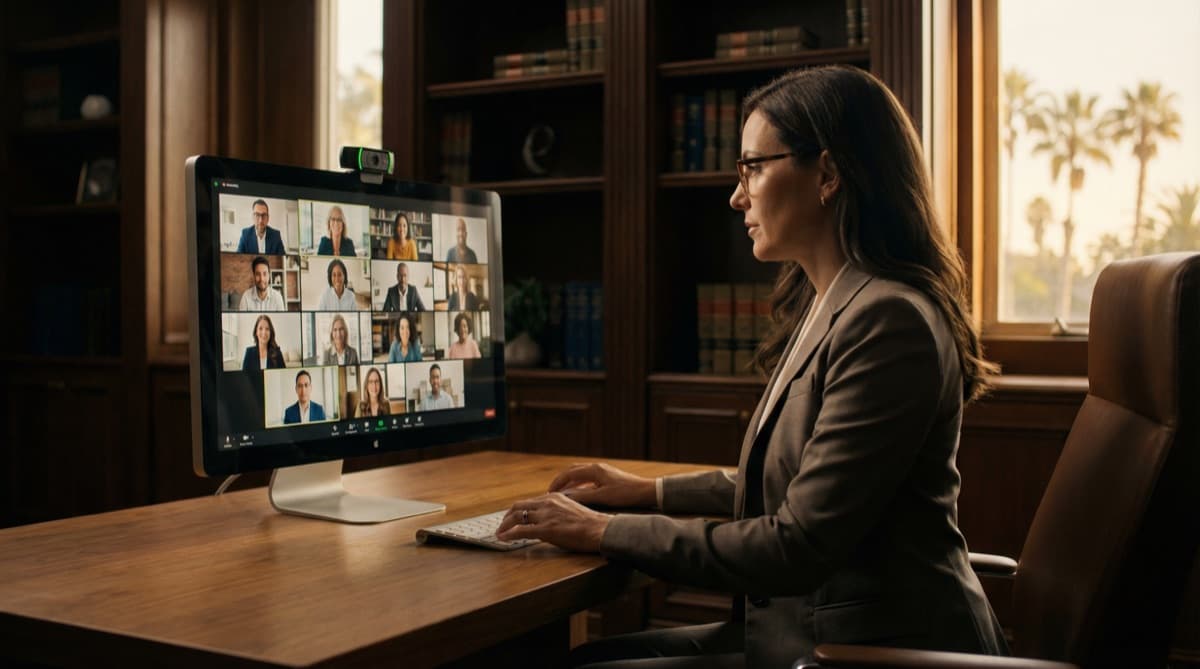
The reporter isn't just managing the audio feed anymore. They are essentially acting as a broadcast director. They must monitor the video grid to ensure that all required participants remain visible. If an attorney's camera drops, or a witness attempts to use a virtual background (which is already prohibited by best practices), the reporter must pause the proceeding and note the technical failure on the record.
Learn more about our court reporting services and how our reporters are trained for modern remote proceedings.
Technical Skills Reporters Will Need
This shift demands a new skill set from court reporters:
- Multi-feed monitoring. Watching 4-12 participant video tiles simultaneously while maintaining the verbatim record.
- Platform proficiency. Understanding host controls on Zoom, Teams, and dedicated deposition platforms.
- On-record documentation. Knowing how to create a clear record when a camera drops, including timestamps and participant identification.
- Pre-deposition verification. Confirming camera functionality, lighting, and background compliance for every participant before going on the record.
The days of simply sending a Zoom link are over. Reporters working under this mandate need training on enterprise-grade platforms where they control the recording parameters and can actively monitor participant feeds.
Citation Capsule: The NCRA reports that remote proceedings already demand expanded technical duties from court reporters. Under the proposed camera-on mandate, reporters must monitor 4-12 participant video feeds simultaneously, pause for camera failures, and document visual compliance on the record.
What Happens When Counsel and the Witness Share the Same Room?
The Florida Bar has addressed this scenario directly in their remote deposition guidelines. Currently, it is common for a witness to request that their counsel be physically present with them in the room during a remote deposition. If the camera-on rule is strictly enforced, this setup requires specific technical configurations.
You cannot simply have two people huddled around a single laptop webcam. The Florida Bar's best practices already suggest that if counsel and the witness are in the same room, there should be two video cameras on separate devices, with one muted to prevent feedback, so that both individuals are clearly visible on the recording.
Our legal videography services are specifically designed to handle these complex multi-camera setups.
The Two-Camera Solution
Here's the practical breakdown of how co-located setups should work under the new rules:
- Camera One: Positioned for the witness, showing their face, hands, and immediate surroundings. No virtual background permitted.
- Camera Two: Positioned for counsel, on a separate device (tablet, second laptop, or dedicated camera), showing their location in the room relative to the witness.
- Audio Management: Only one device should have the microphone active. The second device joins the session with audio muted to prevent echo and feedback.
- Room Sweep: Before going on the record, the taking attorney can request a room sweep via both cameras to confirm no unauthorized materials are visible.
Most agencies treat the co-located scenario as the attorney's problem to solve. That's backwards. The agency should verify hardware compliance before the deposition date, not discover a problem when everyone is already on the clock.
When a legal videographer is deployed to the location to manage the feed professionally, compliance becomes straightforward. This is especially critical for high-stakes depositions where any technical irregularity could become grounds for a motion to suppress.
How Should Law Firms Prepare for the Camera-On Amendment?
According to a 2023 ABA survey, 62% of litigators said they expect remote depositions to remain a permanent part of their practice. Preparing for stricter rules now is not optional. It's basic risk management.
Here's what every South Florida litigation practice should do before this amendment takes effect:
Update Your Remote Deposition Protocols
Review your firm's internal checklist for remote depositions. Make sure it includes:
- A pre-deposition technology check with every witness, confirming camera, lighting, and background.
- Clear instructions to witnesses about prohibited items in the camera frame (second monitors, phones, notes).
- A protocol for what happens when a camera drops mid-testimony.
- Documentation standards for the record when visual compliance issues arise.
Choose Your Court Reporting Agency Carefully
Not every agency has the infrastructure to manage camera-on compliance. Ask these questions:
- Does the agency host depositions on enterprise platforms, or do they rely on basic Zoom links?
- Can the reporter monitor multiple video feeds simultaneously?
- Does the agency deploy legal videographers for co-located setups?
- What is the agency's protocol for documenting camera failures on the record?
For help finding the right reporter, see our guide on scheduling a court reporter in South Florida.
Train Your Witnesses
The camera-on rule changes witness preparation. Attorneys need to brief witnesses not just on substance, but on the technical requirements:
- Webcam must remain on for the entire proceeding. No exceptions.
- No virtual or blurred backgrounds.
- The desk area must be clear of phones, notes, and secondary screens.
- If counsel is in the room, both must be on separate, visible camera feeds.
Citation Capsule: A 2023 ABA survey found 62% of litigators expect remote depositions to remain permanent. Firms that update their remote protocols, verify agency technical capacity, and train witnesses on camera-on requirements will avoid sanctions risks when the amendment takes effect.
What Are the Risks of Non-Compliance?
This is where attorneys need to pay attention. If the camera-on amendment passes and a participant violates it, the consequences extend beyond a stern warning from opposing counsel.
Potential Sanctions and Remedies
- Motion to Strike Testimony. If a witness's camera was off during key testimony, opposing counsel can argue the testimony was tainted by potential coaching.
- Adverse Inference. Courts may draw negative inferences from a participant's refusal to comply with the camera-on requirement.
- Costs and Fees. The non-compliant party could be ordered to pay for a re-deposition, including reporter fees, videographer costs, and attorney time.
- Discovery Sanctions. Repeated violations could trigger broader discovery sanctions under Florida Rule 1.380.
We've already seen motions filed in Broward County citing off-camera conduct during remote depositions, even before this amendment formally passes. The trend is clear: courts are running out of patience with the "my camera just wasn't working" excuse.
The camera-on amendment is a necessary evolution of Florida Rule 1.310. It forces accountability back into the remote environment. But it also means that law firms can no longer rely on bargain-basement vendors who lack the technical infrastructure to manage these strict new parameters. When the cameras are mandated to be on, you need an agency that knows exactly how to keep the record pristine.
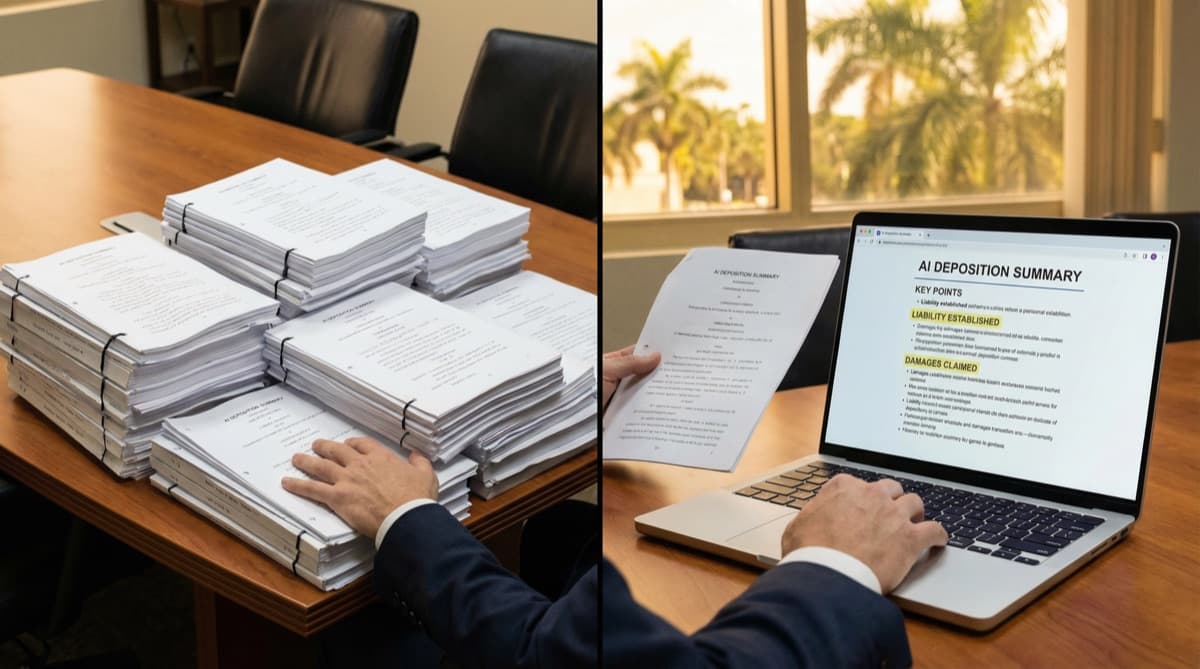
After the deposition, AI-powered transcript summaries can help you quickly identify key testimony and potential coaching indicators in the record.
Frequently Asked Questions
What is the proposed camera-on amendment for Florida remote depositions?
The Florida Supreme Court's Civil Procedure Rules Committee is proposing a strict amendment to the remote deposition rules that would mandate all participants, including witnesses, attorneys, and other parties, keep their cameras on and remain visible throughout the proceeding. This targets the growing problem of off-screen witness coaching.
Why is witness coaching a bigger concern in remote depositions?
In a physical deposition room, everyone present is visible. In a remote setting, participants can receive text messages on second monitors, read notes off-screen, or receive non-verbal cues from someone outside the camera's field of view. The camera-on mandate aims to restore the transparency of an in-person proceeding.
What happens if a participant's camera drops during a remote deposition?
Under the proposed amendment, the court reporter must pause the proceeding and note the technical failure on the record. The reporter effectively acts as a broadcast director, monitoring the video grid to ensure all required participants remain visible throughout.
Can an attorney sit with their witness during a camera-on remote deposition?
Yes, but specific technical configurations are required. The Florida Bar's best practices recommend two video cameras on separate devices, one for the witness and one for counsel, so both individuals are clearly visible on the recording. A single laptop webcam shared by two people does not meet the standard.
How should court reporters prepare for the camera-on mandate?
Court reporters should train on multi-participant video monitoring, familiarize themselves with enterprise-grade deposition platforms, and develop protocols for documenting camera failures on the record. The technical burden shifts reporters from passive audio management to active visual monitoring of the entire video grid.
Need a technically proficient team for your next remote deposition? Schedule with YM Legal Services or call (954) 334-1092.
Related Reading: Florida Rule 1.310: Audiovisual Depositions | Remote Depositions: A Florida Guide | Remote Exhibit Handling for Florida Attorneys | The Future of Litigation Support in Florida